SMALL TOOLS.
STEADY HANDS.
Round-nose, chain-nose and flat-nose pliers help form curves, grip and guide the wire. Cutters trim the ends; mandrels help create even shapes. Simple tools, but every movement counts.

Here in the landscape of South Armagh, ancient fire and enduring folklore meet. Two very different stories, both close to home, and both woven into Twisted Wirestarter.
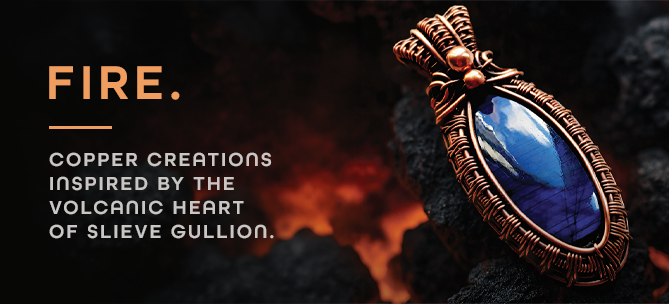
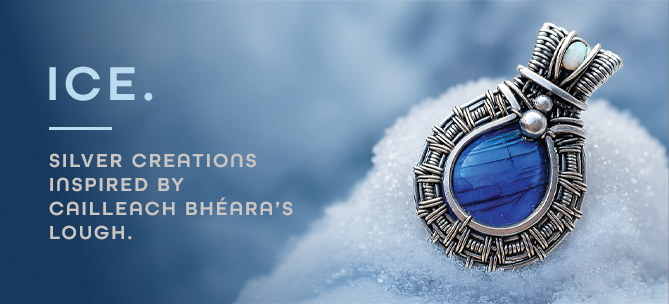
Two elements. One extraordinary landscape.
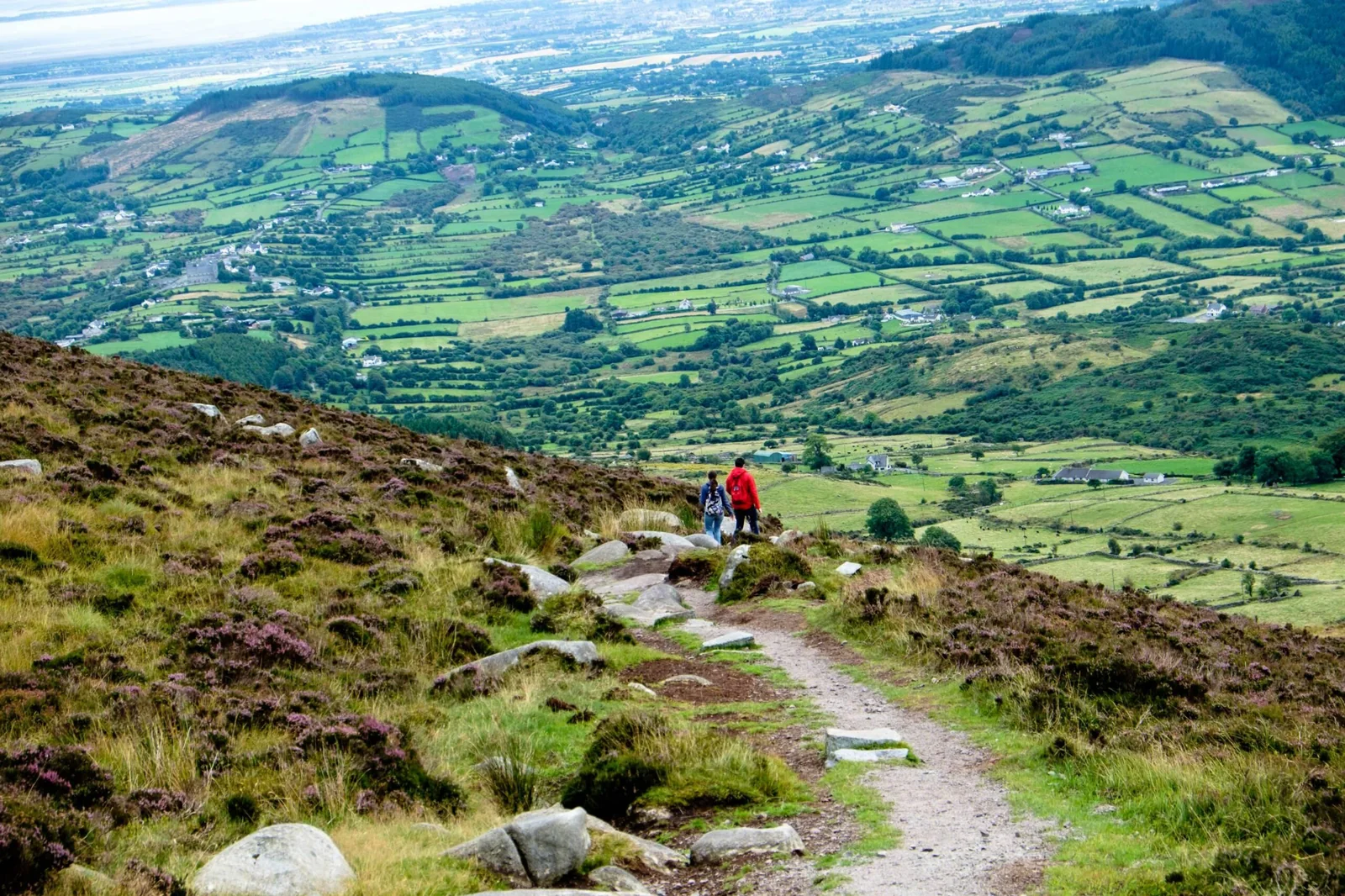
Slieve Gullion rises at the heart of a remarkable ring of hills in South Armagh. Around 60 million years ago, immense volcanic activity shaped the rocks beneath this landscape. The resulting ring-dyke system remains one of the finest examples of its kind in Ireland and Britain.
For my copper creations, it's the perfect inspiration: earthy warmth, raw texture and the beauty of something shaped slowly, layer by layer.
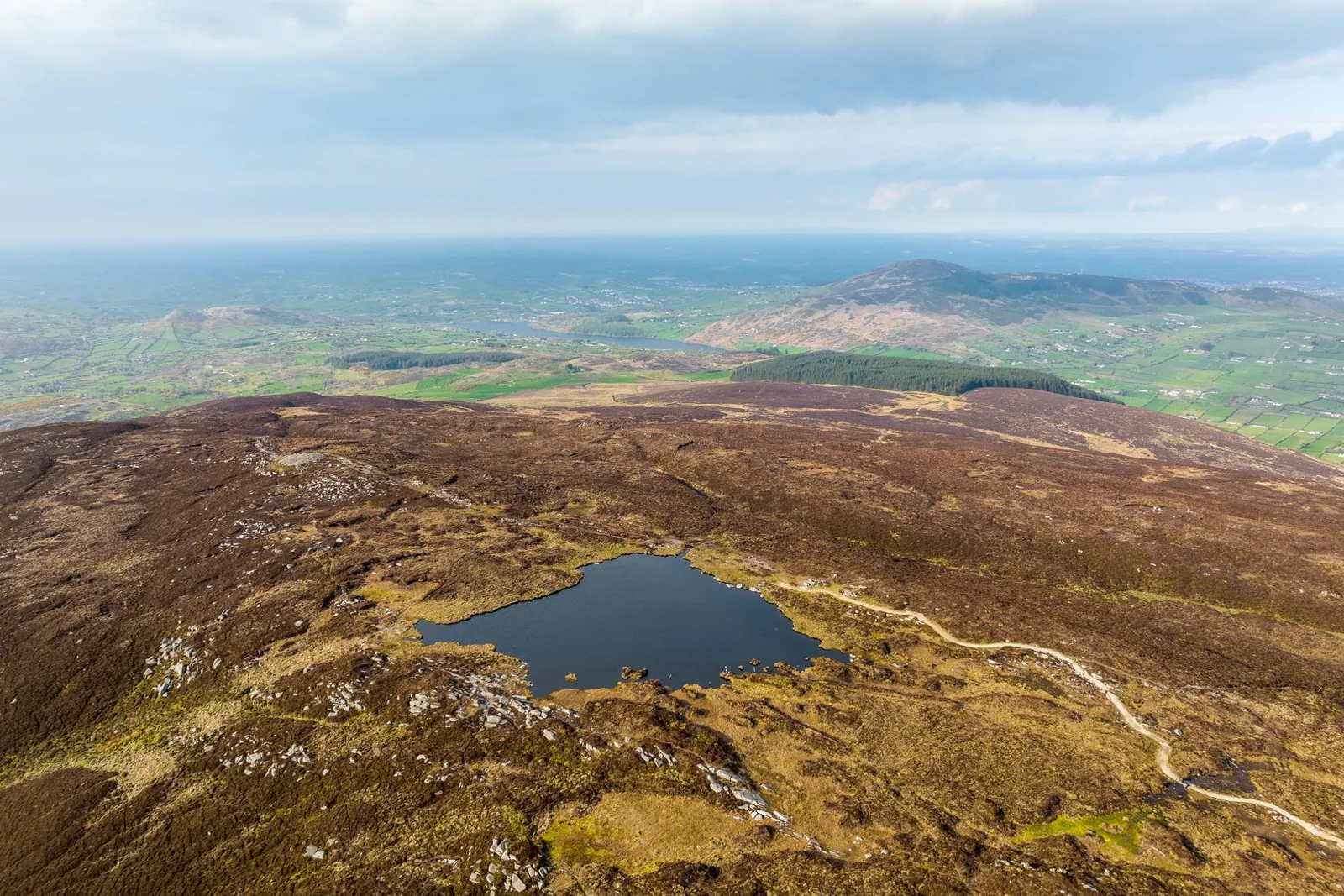
Near Slieve Gullion's summit lies Cailleach Bhéara's Lough, a quiet mountain lake steeped in Irish folklore. The Cailleach, often called the Hag of Winter, is an ancient, powerful figure traditionally portrayed as an old woman and associated with winter, wild weather and the shaping of the landscape.
According to local legend, she appeared to the warrior Fionn Mac Cumhaill as a young woman who had lost her ring in the water. When he dived in to retrieve it, her enchantment turned him into an old man. His youth was eventually restored, but his hair remained white.
Those cool waters, shifting skies and flashes of blue echo through my silver pieces, particularly the natural colour and fire within labradorite.
Shaping precious metal into jewellery is an art thousands of years old. Ancient Egyptian goldsmiths were already working with fine wire, and wire-based techniques have developed in many cultures since. Modern wire wrapping is part of that broader tradition: bending, coiling and weaving metal into a setting that can hold a stone securely without solder.
It's an art form where the structure and decoration become one.
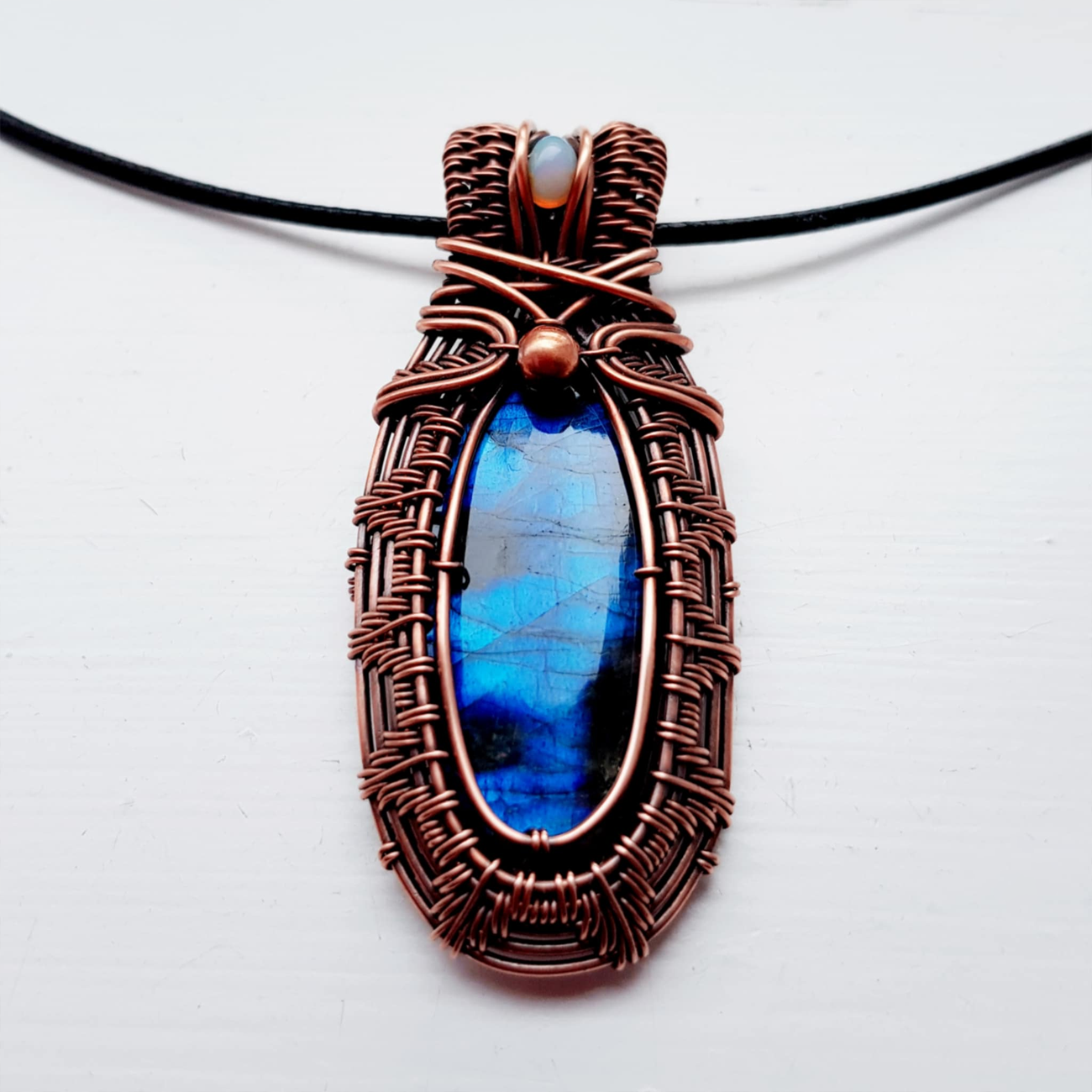
There is no one-size-fits-all design. The contours of each gemstone influence how the wire is shaped, where it needs support and how its natural character is revealed. A curl, a coil or a carefully woven frame can become as much a part of the finished piece as the stone itself.
For me, that's where the creativity lives: finding the balance between what the stone needs and what the imagination sees.
Round-nose, chain-nose and flat-nose pliers help form curves, grip and guide the wire. Cutters trim the ends; mandrels help create even shapes. Simple tools, but every movement counts.
Each semi-precious gemstone brings its own colour, shape and pattern. Labradorite is a particular inspiration, with flashes of blue and green that change as the light catches it. No two stones tell quite the same story.
A secure fit depends on careful tension, consistent coils and neatly finished ends. The wire must protect and hold the stone while allowing its natural beauty to shine. Patience is part of the design.
Not simply wire around a stone. A little engineering, a little artistry, and a lot of time spent getting the details just right. The landscape provides the inspiration. The rest is shaped by hand, one twist at a time.
Explore the local history: Ring of Gullion heritage · Geological Society · The legend of the lough
Wirework background: The Metropolitan Museum of Art · International Gem Society